Improving your digital presence is an adventure. Let us guide you through it.
Contact us using the form below and one of our team members will reach out as soon as possible.
(*) - Required field
Not every in-your-face trend is worth following. Here we’ve curated some of our top suggestions based on what we’ve seen work for our clients and their customers. The focus is (or should be) on website users, after all.
The internet is old hat at this point in history. We’ve gone from online access being a novelty to a world in which most people live a large portion of their lives online. Folks relax with streamed content and gaming, they use their phone or other mobile devices to handle their finances, order groceries, and everything else imaginable from the comfort of their home, and use the internet for countless other reasons, too. So when it comes to effective web design, the expectations–and stakes–are high. Everyone in the online space is shouting for attention, trying to corral customers and generate income.
In this space where companies are jostling and trying to outcompete, trends can help you get noticed. But not every in-your-face trend is worth following. Here we’ve curated some of our top suggestions based on what we’ve seen work for our clients and their customers. The focus is (or should be) on website users, after all. So let’s block out the hype and get down to the details of what will make your website shine in 2026 and beyond. What are the top web design trends for 2026?
Now that we know some of the many reasons why web design trends aren’t always just a fleeting fancy, let’s get into some trends to consider as the new year approaches.
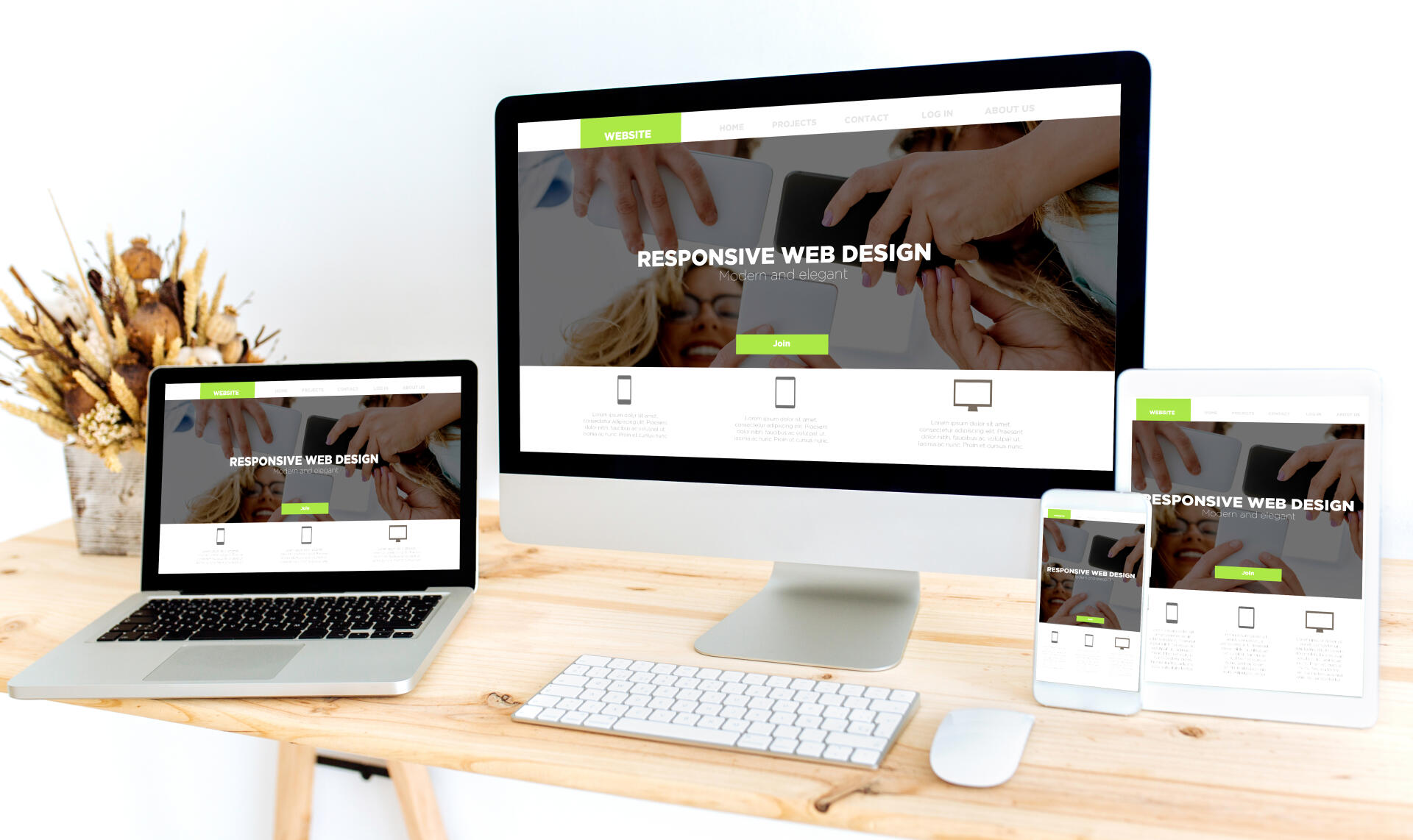
These days, the overwhelming majority of digital purchases–over 70% of all online sales, according to estimates–come from a mobile device. Because mobile traffic dominates online interactions, users have little to no tolerance for websites that aren’t optimized for mobile viewing or are slow to load and glitchy. As search engines pay increasing amounts of attention to website speed and ease of use, that will apply more and more to mobile use as well. Speed should be seen as a baked-in part of custom web design–it’s a need-to-have, for sure.
Why does it matter? Because every business has competitors, and if their sites are easier to navigate and work better for mobile users, a business could be giving up otherwise sure conversions and sales. On the other hand, when mobile performance is done right, it’s much easier to increase conversions and boost retention. Of course, mobile users can’t be the only focus–your website should display and function well on any device.
Websites need to catch up to apps and make better use of microinteractions. This has been and continues to be a web design trend, since it’s the norm elsewhere and users respond well to the prompts. Using microinteractions that both confirm actions and guide users are small additions to a website, but they’re impactful and have become central to what we expect when online.
What are some common microinteractions on a website? Common microinteractions could be: buttons changing color when hovered on, loading spinners, a typing indicator in a chat, subtle animations to confirm actions, autocomplete suggestions, highlighting incomplete fields, and so many more. Can you even imagine traversing the internet without these friendly nudges?
Why do microinteractions on a website matter? Because they drive user engagement and make your website easier and more enjoyable to use. It’s true that microinteractions should fade into the background, but all the same, without them, site users could be left floundering. They help to provide key feedback and enhance usability while also boosting retention rates and optimizing mobile experiences and site navigation for users. This is also another chance to subtly showcase your brand personality. And a key benefit is that they can sometimes make up for unavoidable delays in load time, since they are responsive and keep users in the loop. Like any other trend, microinteractions demand careful thought and need to enhance functionality to be included.
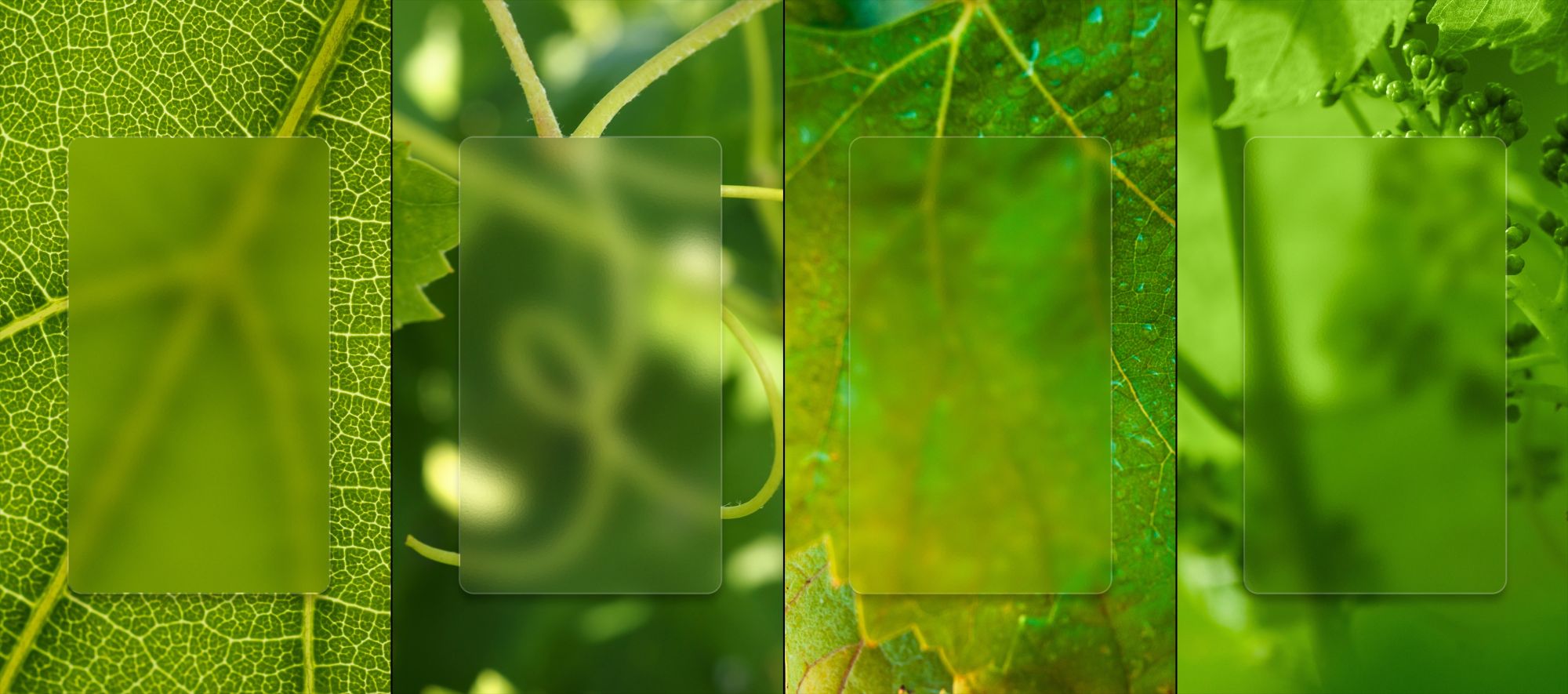
Frosted glass imagery goes hand in hand with dark mode and other design styles that play with depth, shadow, and transparency. It offers a lightweight approach to custom web design, making user interface elements look like frosted glass. When done right, this style naturally conveys polish and elegance thanks to its minimal, clean aesthetic, lending itself to brands that capitalize on minimalism, modernity, and futuristic themes. It’s also a great way to visually separate graphics while keeping things light and airy, without too bold of an approach. Not every business will be an ideal fit for this trendy way to render content online, but where it is used, it’s immediately noticeable.
Why does glassmorphism matter as a web design trend? For one thing, it calms the tone of a website down while boosting and supporting readability. It also helps to create a sense of depth, which is visually appealing. The frosted glass effect makes page layouts feel layered in a very real sense, pulling viewers into the content. Where busy backgrounds can feel chaotic, clean aesthetic decisions–like glassmorphism–can bring a calm that could cause site users to linger and interact just that little bit longer. It also offers a high-end vibe. Soft lines, shadows, and delicate color gradients enhance the tactile appeal of your website while keeping things refined and accessible for a wider range of site users.
What is scrollytelling? Scrollytelling is a web design and digital storytelling technique that allows the site to unfold as it were, telling a story as users scroll down a page. Effects used could include animations, images, video, text, data visualizations, and other interactive elements, combined to create scenes that are gradually revealed to gently guide site users through your content. The resulting narrative allows for more progressive product reveals, creating sumptuous and layered scenes that keep building. Data visualizations and interactive content can help users feel immersed.
Why does scrollytelling work, and why should you consider incorporating it into your website redesign? For one thing, it helps to reduce the mental load on site users who are being bombarded by content, instead leading them step-by-step through important information, that brings clarity. At the same time, users are able to move at their own speed and retain a level of control. Scrollytelling can also appeal on an emotional level, creating a lasting and memorable experience that helps users retain the information and come back for more. Taken together, these psychological pulls can help to build engagement and loyalty. In the end, this is all about telling a good story.
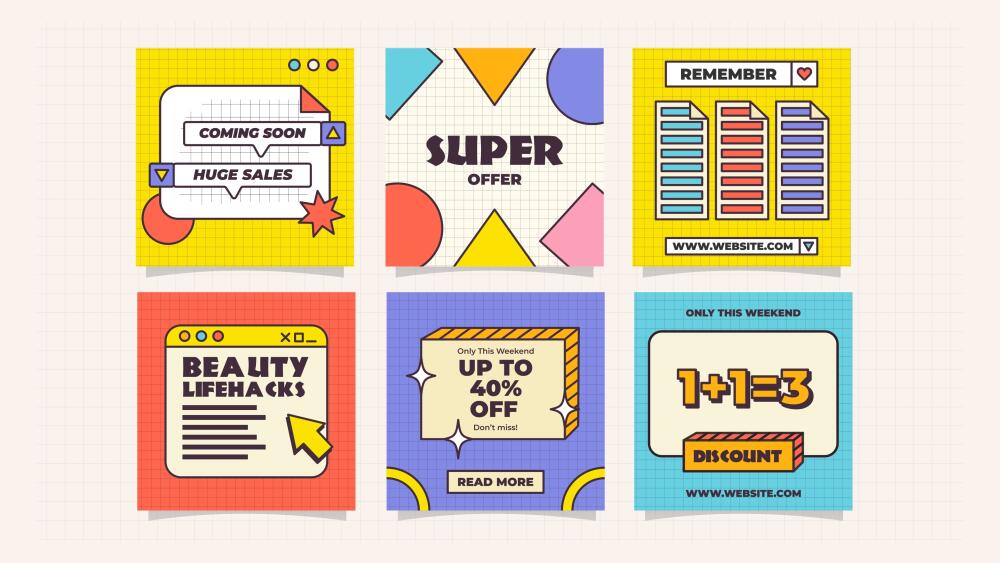
Who isn’t nostalgic for their youth and the aesthetics of the time? Especially with ever-present AI and automation concerns looming large, styles that feel less perfect, more personal, are gaining traction online. Right now the early 2000s aesthetics are hot, and while that will no doubt shift eventually, this is really about knowing your customers and what might appeal to them personally.
Why does retro revival stand out as a trend to consider? Retro aesthetics, as a simultaneous trend to the sleek look of glassmorphism, could seem like a contradiction, but much depends on the end user. For folks who revel in the charming, inviting, and emotionally relatable visuals of the past, and for companies whose brands identify with that vibe, the nostalgic trend is useful. This boils down to having solid notions of your company’s branding and knowing who your ideal customer is. For a more approachable, less corporate visual, go retro and embrace a chaotic, textured throwback. It might be time to make some visual noise.
In 2026, AI-generated content is predicted to far supersede human-originated content. While some may paint this future with a thick coat of doom and gloom, it doesn’t have to be that way. Content will always fall into a “good” or “bad” camp, depending on your aim and how it’s used. In our digital marketing context, “good” content is thoughtfully done and serves a clear purpose–that’s whether it’s written by a bot or a human. Quality and relevance trump your writing process, every single time. Besides, in our minds, AI content isn't meant to replace expert content from folks who have extensive life and professional experience–that simply can’t be imitated. But for certain low-tier content needs, knowing how to harness and best utilize AI will be an increasingly powerful and valuable skill.
But content isn’t the only consideration here. AI is also intensely useful when it comes to actually building a website and its various parts. "Vibe coding" is a term that is often used in this realm, and while that sounds pretty esoteric, all it boils down to is web developers who specialize in custom web design using plain language to prompt AI tools to develop code that builds websites. The focus is on the vibes–the aesthetic appeal and feel of a site–and developers can guide AI tools where they’d like them to go and then refine the results. This speeds up the process and frees the developer to focus on concepts and bigger pictures, while also increasing productivity.
SEO also gets an AI upgrade, with services like Artificial Intelligence Search Optimization (AISO), where content is crafted, not with an eye on algorithms, but with the intention of appealing to the AI tools that fuel modern search engines. Content needs to be helpful, actionable, and include clear answers to common questions. Including this sort of content on your website in 2026 will help to increase traffic and get you noticed by search engines.
Lastly, AI chatbots and virtual assistants are also über popular among native internet users and folks who simply prefer online engagement to a traditional phone call. It’s a great way to engage with customers and solve issues, especially when you’re out of the office or after hours. Custom web application development services can help your business to make the most of this evolving opportunity.
It can be fun to know about and partake in trends. Or you could be a naysayer who isn’t a fan. But neither camp is necessarily right–it takes a nuanced approach to know if a web design trend is right for you.
Trends are a dime a dozen, and they come and go, but trends that stick around to become styles or accepted features will always have one thing in common: they leave websites better for using them. Now, yes, we fully admit that “better” is a subjective term, but that’s the beauty of this exercise–you set the parameters.
So before diving headlong into 2026 trends or dismissing them outright, ask yourself some key questions:
It’s also worth determining if a trend is just picking up momentum or if it’s already on its way out. Something that moves really quickly won’t be around for long, and it doesn’t make sense to commit to a change as large as a website update–that will backfire and leave you looking outdated and irrelevant.
TL;DR? Here’s what you really need to know: if acting on a trend won’t improve clarity or somehow make using your website easier and more likely to convert visitors to customers, leave it behind. And if it does fit that bill, only hop on the bandwagon if it aligns with your company and brand. Simple? Maybe. Not.
OK contrarians–we see you. So often when everyone else is following trends, you’re shaking your head. And in some cases, we’d be right there with you. But for your company’s website to gain traction and for you to find those ideal customers, sometimes you’ve just got to play the game…to a point.
Remember that your company’s website is often the first interaction customers may have with your business and brand. As is always the case, first impressions typically last the longest. So if certain trends aim at improving user experience, engagement, and streamlining processes online, then those are trends worth investigating. Besides these key must-haves, websites should also feel current and on-brand, all while prioritizing smooth function and easy navigation.
There’s a lot to keep track of! So it’s really worth stressing how embracing certain trends can end up benefiting your company from a brand perspective. Potential perks can include things like bringing positive attention to your brand by:
Knowing which trends are the now can also help you to identify opportunities for growth, based on changing customer preferences and interests. So whether you utilize trends to build a new website or shift how you interact with current customers, there’s value in being aware and being selective, to ensure that trend following doesn’t end up backfiring.
Remember, too, that every single day sees potentially hundreds of thousands of new websites hitting the web (and search engines.) They’ll likely be employing the latest and greatest web design trends. To stay afloat in that deluge, you need to keep ahead of the tidal wave. Selectively implementing up-and-coming trends in a way that accentuates your brand is one way to do that. Action taken here can go far to benefit your online presence as well, since Google is also paying attention and often prioritizes websites that cater to user experience.
Trend setter? Trend adopter? Trend avoider? Wherever you fall on that spectrum, the expert team at your local Cleveland digital marketing agency is here to help you realize your vision for your website. We can help to gently guide your ideas and add nuance and insights gained from industry experience to ensure that whatever choice you make, it’s going to benefit your customers, business, and bottom line.
We’re happy to help you utilize trends like the ones mentioned here, but we tend to be pretty selective. Because, remember, if a trend doesn’t move any needles, it’s just digital decor, potentially obnoxious glitter that you could regret ever using. At Alt Media Studios, we plan to be here for the long haul, and we’ll see trends come and go, but we’re always looking for the ones that stick around. Those will become the tried-and-true design elements and styles of tomorrow. And we’ll be right here, ready to thoughtfully employ classic and innovative custom web design methods alike, all to benefit our clients.
Ready to learn more? Want to get started on your own custom-built website? Curious about what else we have to offer? We’re waiting–reach out today!

Is your website losing leads? Discover 8 critical issues revealed in a website audit and learn how to fix them to improve your user experience and conversion rates.

Avoid the pitfalls of DIY site building. Learn how a lack of professional design and SEO can lead to significant search traffic drops and hurt your brand's credibility.

Improve your site speed and SEO with professional image optimization. Learn why resizing and compressing images is critical for a better user experience and ranking.